




Why reframing imposter syndrome as a manageable mindset, not a personal flaw, is the leadership shift your organization needs right now.
I still battle with imposter syndrome. And in this AI era, I genuinely believe it has intensified.
We’re living through rapid change. Technology is evolving. Careers are shifting. The future of work feels uncertain. Add constant comparison through social media and professional platforms, and it’s no surprise that self-doubt is creeping in. All of this amplifies those quiet thoughts many of us don’t say out loud: They’re going to catch me out. Am I falling behind? Do I still belong in this industry?
But here’s what I’ve learned: the way we talk about imposter syndrome is part of the problem.
The Language Trap
When we call it a “syndrome,” we’re using medical terminology that implies permanence. A syndrome is something genetic, inherited, something you’re born with and can’t escape. No wonder professionals feel hopeless.
What if we reframed it instead as an Imposter Monster? A set of manageable thoughts we can learn to name, challenge, and tame. Not something broken about you. Just something you can work with.
This distinction matters. Especially now.
Why Imposter Feelings Are at All-Time Highs
Research shows that approximately 70% of professionals experience imposter syndrome at some point. But in an AI-driven world, that number is climbing.
A cybersecurity analyst worries they won’t stay relevant without AI security knowledge. A software engineer questions whether generative AI will replace their role. A security architect feels behind on emerging threat certifications. A DevOps engineer wonders if their traditional skills are becoming obsolete.
This isn’t weakness. It’s a rational response to genuine uncertainty.
The problem is that we’re not equipping professionals with the tools to navigate this. Instead, we tell them to “just be confident” or “fake it till you make it.” We create environments where admitting uncertainty feels dangerous.
And the people suffering in silence are often your best performers.
Five Behavioral Patterns That Hold People Back
When imposter feelings go unchecked, these imposter thoughts can then shape our behaviour. Here are five behavioral patterns that emerge:
- The Superhuman stretches themselves thin, always trying to do more to prove their worth.
- The Natural Genius expects everything to come easily and gives up when it doesn’t.
- The Perfectionist obsesses over tiny mistakes and never feels “ready.”
- The Expert is always learning but feels like they don’t know enough, even though they do.
- The Soloist refuses help, believing asking for support proves incompetence.
Sound familiar? Most high-performing teams have all five. And most are suffering quietly.
The ACT Framework: A Practical Solution
Over years navigating my own career, from Chemistry to cybersecurity and from imposter feelings to keynote speaking, I’ve developed a practical framework for taming the imposter monster. It’s called ACT:
- Acknowledge the imposter thought without judgment.
- Challenge it with evidence and facts.
- Take Action even in the face of fear.
The beauty of this framework is that it’s not about eliminating self-doubt. It’s about working with it. The imposter monster doesn’t go away. But you learn to live with it, manage it, use it.
What Organizations Need to Do
Talent is leaving because of unmanaged imposter syndrome. People are quiet-quitting, seeking less visible roles, or burning out from proving themselves endlessly.
Here’s what leaders can do:
- Normalize the conversation. When you openly discuss your own imposter moments, you give permission for others to do the same.
- Celebrate growth. When teams see mistakes as learning opportunities (not failures), they innovate faster and take more risks.
- Build psychological safety. Create environments where “I don’t know” and “I need help” are safe. These teams innovate faster and retain talent longer.
- Provide frameworks, not platitudes. Don’t just say “be confident.” Give people tools like ACT. Give them permission to document wins. Give them language to name their monsters.
The Future Demands This Shift
In an AI-driven world where change is constant, imposter syndrome isn’t going away. It’s part of the landscape now. The question isn’t how to eliminate self-doubt. It’s how to help professionals live alongside it productively.
The leaders and organizations that win will normalize this conversation. They’ll reframe “I don’t know” as “let’s figure this out together.” They’ll understand that the best teams aren’t composed of people who never doubt themselves. They’re composed of people who’ve learned to name their monsters and take action anyway.
Your best people are already fighting this battle. The question is: will you give them the tools and permission to win?
About the Author
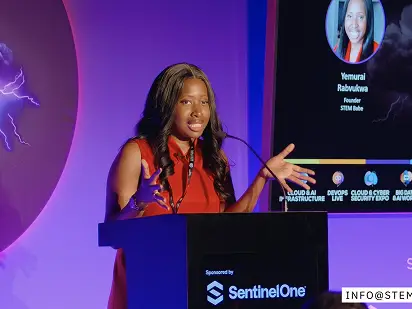
Yemurai Rabvukwa is a Senior Cybersecurity Associate, keynote speaker, and careers strategist. With a First-Class Chemistry degree and a non-traditional path into tech, she facilitates conversations within the AI and technology space, engaging C-suite leaders from Apple, Google, Salesforce, and many more, alongside policymakers and industry professionals on skills, technology, and the future of work. She’s a TechWomen100 Award winner and University of Liverpool 2025 Alumni Award recipient. Through her keynote Navigating the Imposter Monster in the AI Era, she helps professionals and organizations tame self-doubt and build resilience in uncertain times.
“There are speakers who show up and deliver. And then there are people who show up, give everything, and leave a room permanently changed. Yemurai Rabvukwa is the latter.”— Gladys Chibanda, Vice President, Internet Society Zimbabwe
“All participants came out from this workshop more empowered. She is already a leader, an inclusive leader who is forward thinking and innovative in her approach.”— Dr. Cathie J., Cybersecurity & AI Risk Specialist, Queen Mary University of London